
The right carbide cutting tool can mean the difference between a stable, productive process and a cycle of premature wear, scrap, and unplanned downtime. For manufacturing engineers and shop managers running high-speed drilling or turning applications, the selection criteria go far beyond brand names or catalog specs.
 Pilot Precision Products helps manufacturers navigate these decisions every day through its carbide cutting tools portfolio and dedicated Tooling Concierge service. This article walks through eight critical factors that directly influence tool life, surface finish, and process stability in your operation.
Key Takeaways: Choosing Carbide Cutting Tools for Drilling and Turning
- Carbide grade and substrate composition directly determine how a tool handles heat, wear, and impact during high-speed operations.
- Coating selection (TiAlN, TiCN, or DLC) should match the workpiece material to maximize tool life and surface finish quality.
- Tool geometry, including rake angle and flute design, affects chip evacuation, cutting forces, and dimensional accuracy in every application.
- Pilot Precision Products connects you with experienced applications engineers who recommend the right carbide tooling for your specific operation.
- Process stability depends on pairing the correct insert or drill with appropriate feeds, speeds, and coolant strategies for your material.
What to Evaluate When Selecting Carbide Cutting Tools for Drilling and Turning
1. Carbide Grade and Substrate Composition
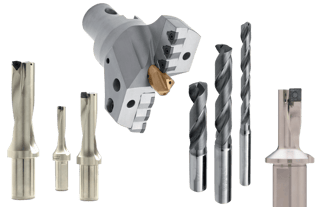 The foundation of any carbide tool starts with its substrate. Tungsten carbide (WC) bonded with cobalt (Co) creates a material that balances hardness and toughness. Higher cobalt content increases impact resistance, while lower cobalt delivers greater wear resistance at elevated speeds.
Ultrafine grain substrates push red hardness even further, making them a strong fit for interrupted cuts or high-speed turning operations on hardened steels. Matching the grade to your specific workpiece material prevents premature failure and keeps tolerances tight across extended production runs.
2. Coating Type and Application Match
Coatings act as a thermal and abrasion barrier between the cutting edge and the workpiece. TiAlN coatings excel in dry or near-dry drilling at elevated speeds because they form an aluminum oxide layer that resists heat effectively.
TiCN coatings offer high surface hardness, making them effective for stainless steel and carbon steel operations at moderate cutting speeds. DLC (diamond-like carbon) coatings reduce built-up edge formation on aluminum and non-ferrous metals. Always choose the coating based on the material being cut, not the catalog description alone.
3. Tool Geometry and Edge Preparation
Rake angle, helix angle, and flute design all influence how a tool performs under load. Positive rake angles reduce cutting forces and are ideal for softer metals, while negative rake geometries add edge strength for hard turning of steels above HRC 50.
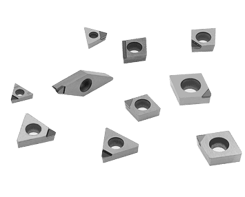 Edge preparation, such as honing or chamfering, controls how the tool enters the cut and engages the workpiece. A properly prepared edge minimizes microchipping and extends tool life significantly, especially when machining heat-treated materials where edge integrity directly affects dimensional accuracy.
4. Workpiece Material Compatibility
No single carbide tool handles every material equally. Hardened steels demand nano-grain substrates paired with heat-resistant coatings for sustained performance. Stainless steels require sharp geometries and coatings that prevent work hardening at the cut zone during prolonged operations.
Aluminum and copper alloys benefit from uncoated or DLC-coated tools with polished flutes to prevent adhesion and built-up edge. Pilot Precision Products offers Palbit carbide tooling engineered for materials ranging from mild steel to exotic aerospace alloys, all backed by application-specific engineering guidance.
5. Chip Evacuation and Flute Design
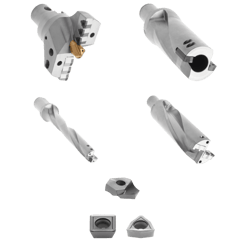 Poor chip control creates a chain reaction of problems: re-cutting, surface damage, heat buildup, and shortened tool life. Internal coolant channels paired with spiral flutes push chips away from the cutting zone efficiently in both drilling and turning applications.
For deep-hole drilling (5xD and beyond), flute volume and polish quality matter more than almost any other design factor. Mirror-polished flutes reduce drag and prevent chip welding, keeping your holemaking process stable even at aggressive feed rates and higher spindle speeds.
6. Insert Shape and Clamping System
In turning operations, the insert shape determines how much contact the tool makes with the workpiece surface. CNMG and WNMG inserts offer versatility across roughing and finishing, while VBMT inserts excel in tight-clearance profiling where access angles are limited.
The clamping system matters just as much as the insert itself. A rigid, vibration-free setup reduces chatter and protects surface finish quality. Indexable holders from Palbit, available through Pilot Precision Products, pair matched inserts with stable toolholding for repeatable shift-to-shift performance.
7. Feeds, Speeds, and Coolant Strategy
Even the right tool underperforms when paired with incorrect cutting parameters. Feeds and speeds should reflect the carbide grade, coating, workpiece material, and depth of cut. Running too fast generates excessive heat. Running too slow accelerates abrasive wear on the cutting edge.
Coolant delivery, whether flood, through-tool, or MQL (minimum quantity lubrication), plays a direct role in how long your tool lasts. Through-tool coolant is especially critical for deep-hole drilling and high-speed turning where thermal control keeps the cutting edge intact and productive.
8. Tool Life Monitoring and Resharpening
Tracking wear patterns tells you whether your tool selection and parameters are optimized. Flank wear, crater wear, and built-up edge formation each point to different root causes that can be corrected with adjustments to speed, feed, or coating choice.
When tools reach the end of their initial life, resharpening can restore cutting performance and reduce total cost of ownership. Pilot Precision Products offers in-house resharpening services with state-of-the-art machinery designed to extend the productive life of your entire tooling investment. A recent study on tool material selection for CNC turning confirms that matching substrate properties to operating conditions is the single most impactful variable in tool life outcomes.
How to Match Carbide Tooling to Your Machining Application
Selecting carbide cutting tools is not a single decision. It is a series of connected choices that affect everything from cycle time to part quality and production cost. Each factor above interacts with the others, so optimizing one variable in isolation rarely delivers the results you need.
That is where working with an experienced applications engineering team makes a measurable difference. Pilot Precision Products acts as your Tooling Concierge, analyzing your part drawings, material specifications, and machine capabilities to recommend carbide cutting tools that perform from the first cut.
Instead of sorting through catalogs and hoping for the right match, you get a tailored recommendation backed by decades of precision tooling expertise. That approach reduces scrap, lowers tooling costs, and helps you maintain the process stability your production schedule demands.
FAQs about Key Factors in Choosing Carbide Cutting Tools
What makes carbide tools better than HSS for high-speed drilling?
Carbide maintains its hardness at temperatures exceeding 600°C, while HSS softens much sooner. This means you can run higher spindle speeds and feed rates without sacrificing edge integrity or hole quality.
How do I choose between TiAlN and TiCN coatings?
TiAlN handles high heat and works well for dry or near-dry machining of hardened steels. TiCN offers greater surface hardness and performs better on stainless and carbon steels where moderate speeds and coolant are used.
Can one carbide insert work for both roughing and finishing?
Some versatile geometries, like CNMG inserts, handle both operations. However, dedicated roughing and finishing inserts typically deliver better results because their edge preparations are optimized for each specific task.
How does Pilot Precision Products help with carbide tool selection?
Pilot Precision Products assigns dedicated applications engineers who review your part, material, and machine setup. They recommend the right round cutting tools, inserts, and parameters so you get reliable results from the start.
When should I consider resharpening instead of replacing a tool?
Resharpening makes sense when the substrate is still sound and only the cutting edge has worn. It restores performance at a fraction of the replacement cost and reduces inventory overhead significantly.
What role does coolant play in extending carbide tool life?
Coolant removes heat from the cutting zone, lowers surface resistance, and flushes chips away. Through-tool coolant delivery is especially important for deep-hole drilling and high-speed operations where thermal control directly impacts edge durability.