
In machining, there’s a long-standing assumption that shops must choose between maximizing tool life and minimizing cycle time.
Run tools conservatively, and they last longer. Push them harder, and they wear out faster.
At first glance, it feels like a straightforward trade-off. But in practice, this framing oversimplifies a much more complex—and more important—relationship.
Why This Isn’t Actually a Binary Decision
The idea of choosing between tool life and cycle time assumes that each exists independently. In reality, both are outputs of the same underlying variables: cutting parameters, tool selection, machine capability, and process stability.
_Page_1_Image_0001-1.jpeg?width=314&height=418&name=PILOT-PALBIT-FULL-CATALOG-SPG-2022-AUG8-V1%20(dragged)_Page_1_Image_0001-1.jpeg) When shops default to extending tool life, they often do so by reducing speeds and feeds. In some modern tooling systems, however, slowing down can actually accelerate wear. Certain advanced geometries and coatings are designed to operate within specific thermal and cutting-load ranges. Running too conservatively can create instability, excess heat, or poor chip formation—similar to buying a high-performance machine only to keep it stuck in traffic. This approach minimizes wear, but it also increases cycle time—sometimes significantly.
When shops default to extending tool life, they often do so by reducing speeds and feeds. In some modern tooling systems, however, slowing down can actually accelerate wear. Certain advanced geometries and coatings are designed to operate within specific thermal and cutting-load ranges. Running too conservatively can create instability, excess heat, or poor chip formation—similar to buying a high-performance machine only to keep it stuck in traffic. This approach minimizes wear, but it also increases cycle time—sometimes significantly.
On the other hand, pushing tools aggressively without a stable process can lead to premature failure and inconsistency.
The problem isn’t choosing one priority over the other. It’s failing to optimize the system as a whole.
Machine Time Carries More Weight Than Tooling Cost
One of the most important considerations in this discussion is the relative cost of machine time.
Machines represent a major investment, and their value is realized only when they are producing parts efficiently.
Every additional minute of cycle time affects:
- Throughput capacity
- Scheduling flexibility
- Overall operational efficiency
- Overall equipment effectiveness)
In many cases, the cost of machine time far exceeds the cost of tooling. This means that reducing cycle time—even at the expense of slightly shorter tool life—often results in better overall economics.
Stability Determines What’s Possible
The ability to optimize both cycle time and tool life depends heavily on process stability.
When a process is unstable, shops are forced into conservative settings. They prioritize avoiding failure over maximizing performance.
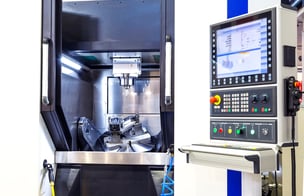 Stable processes, however, allow for more aggressive and efficient cutting conditions. In machining dynamics, this is often associated with what engineers refer to as a 'stability lobe'—the relationship between spindle speed, vibration frequency, and cutting forces. In many cases, a slight increase or decrease in speed or feed can move the process into a more stable operating condition. With confidence in the setup, shops can run closer to optimal parameters without introducing risk.
This is why stability is often the limiting factor—not tooling or machine capability.
Finding the Optimal Operating Window
Rather than viewing tool life and cycle time as competing priorities, high-performing shops focus on identifying the optimal operating window.
This is the range where:
- Tools perform consistently
- Cycle times are minimized
- Total cost per part is optimized
This window varies depending on:
- Material properties
- Tool geometry and coatings
- Machine rigidity
- Workholding setup
There is no universal answer—only context-specific optimization.
Moving Toward Continuous Improvement
The most effective approach is not static. It evolves over time.
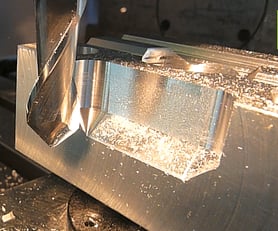 Shops that prioritize performance track key metrics such as:
- Tool wear patterns
- Cycle time consistency
- Production output
By analyzing this data, they refine their processes incrementally, improving both efficiency and predictability.
Reframing the Conversation
When approached strategically, the perceived trade-off between tool life and cycle time begins to disappear.
Instead of asking which to prioritize, the focus shifts to how both can be optimized together. One real-world example involved machining a large Inconel ring where lower-cost tooling could not complete a full circumference in a single pass. Operators were forced to stop mid-cut, index inserts, and deal with burr formation that required extensive hand polishing—and occasionally resulted in scrapped parts. Switching to a premium tool that cost several times more per insert eliminated those interruptions entirely and dramatically reduced total cost per part.
And in doing so, machining becomes less about compromise—and more about control.
Optimization Isn’t About Trade-Offs—It’s About Alignment
If your process is forcing you to choose between tool life and cycle time, there may be a deeper opportunity to improve both.
 Pilot Precision helps manufacturers identify the optimal balance for their specific applications. Through its concierge-style support approach, Pilot Precision works alongside production teams to identify practical improvements that drive measurable performance gains.